Woodland and scrub / Grassland / Private project
Project details
Our property extends to approximately six acres, with around one acre occupied by the house and gardens. The remaining five acres were historically managed as intensive arable farmland on Fenland silt soils, producing crops including sugar beet, wheat and onions. Since the late 1990s the land has been maintained as grassland for hay, creating an opportunity to restore habitats and increase biodiversity.
Our aim has been to transition parts of the site from agricultural production to a more diverse and resilient landscape, allowing natural processes to play a greater role while creating habitat for wildlife.
Around 2012 we planted double rows of mixed native trees along the field boundaries. In 2014, through the Woodland Trust's MOREwoods scheme, we received advice and part funding to establish approximately 0.65 hectares of native woodland around three sides of the field.
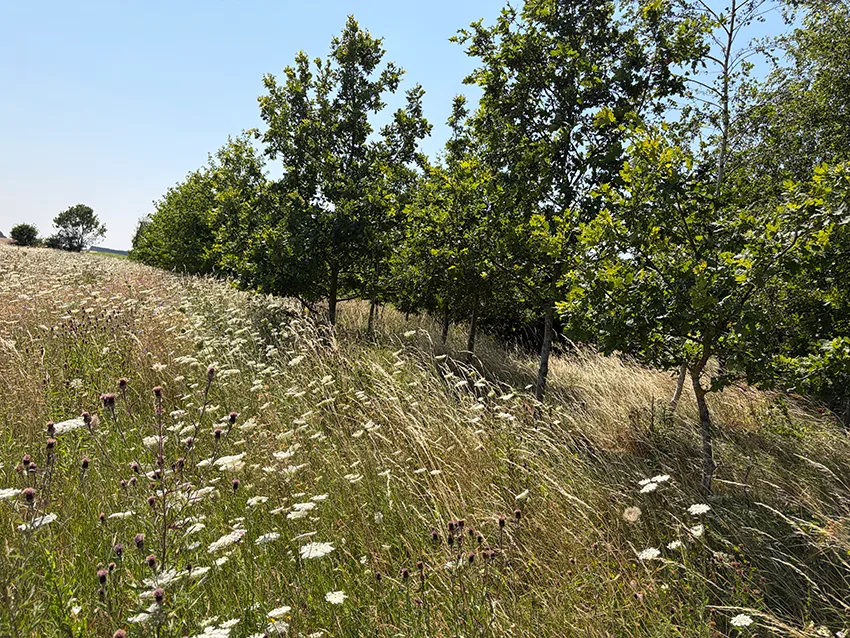
During the winter of 2014–15, 650 native trees and shrubs were planted, including oak, alder, goat willow, aspen, silver birch, field maple, wild cherry, hornbeam, rowan, walnut, crab apple, hazel, hawthorn, blackthorn, spindle, dogwood and dog rose.
Vegetation around the young trees was controlled during the first two growing seasons to aid establishment. Since then, management has been intentionally light, with only a single ride mown for access while natural regeneration is encouraged.
A ten-year Woodland Trust assessment confirmed the woodland had established successfully with very few losses. Naturally regenerated seedlings are now widespread and retained, while bramble is left as valuable habitat and a food source for wildlife.
Recent winter work has been limited to selective pruning, with cut branches left on the woodland floor as deadwood habitat and to recycle nutrients. One stand of goat willow has been pollarded, with rotational pollarding and hazel coppicing planned.
Planting is not permitted within nine metres of the Internal Drainage Board dyke, so this strip has been restored as species-rich grassland. Native wildflower seed was sown in autumn 2021, and the meadow now supports an increasing diversity of flowering plants, with fourteen wildflower species recorded in July.